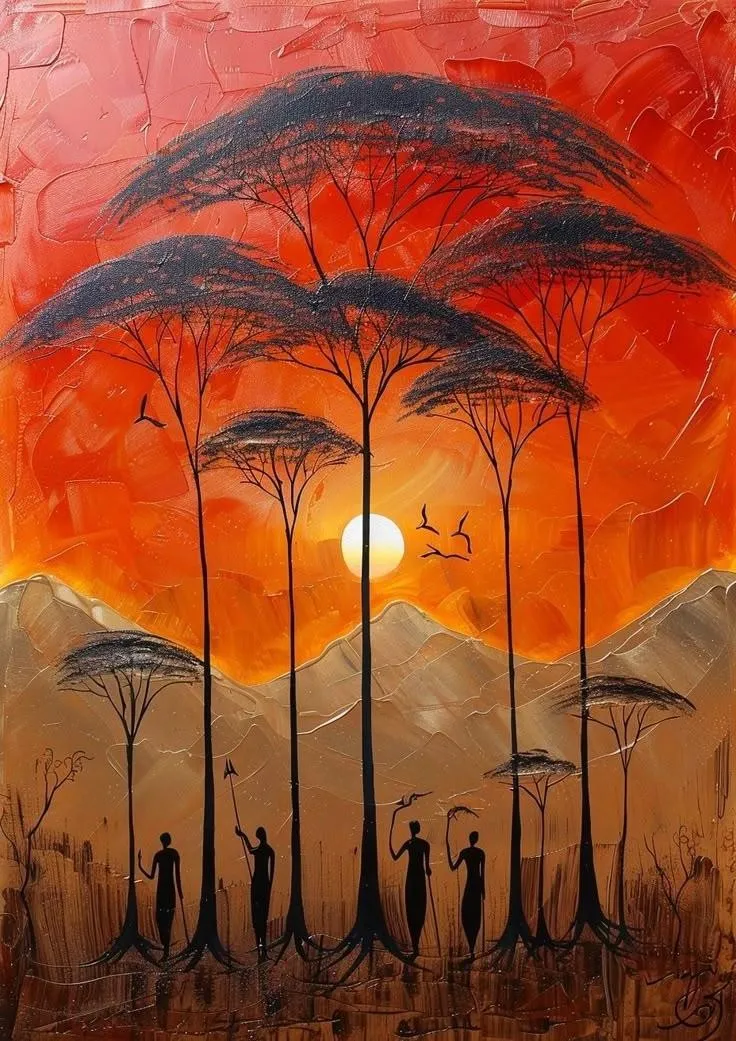
The Case for Arts and Culture
In the modern corporate world, we are often obsessed with "The Grind." We worship at the altar of spreadsheets, key performance indicators (KPIs), and the "Agile" mindset. If an activity doesn’t immediately result in a certificate, a billable hour, or a promotion, we tend to dismiss it as a distraction. We tell ourselves, "I’m an engineer; I don't have time for poetry," or "I’m a business leader; folklore won’t help me pay my bills."
We argue that this is not just a boring way to live—it’s a strategically flawed way to lead.
Debunking the "Starving Artist" Myth
The most common argument against indulging in the arts is that it is "unproductive." We view art as a luxury for the idle or a desperate pursuit for the "starving." But history tells a very different story.
Take Albert Einstein, for example. When he was stuck on a particularly grueling physics problem, he didn’t just stare at his chalkboard until his eyes bled. He played the violin. He famously said that he often "thought in music" and that his intuition for physics was deeply tied to his musical perception.
Then there is Santiago Ramón y Cajal, the father of modern neuroscience. He wasn’t just a Nobel-winning scientist; he was an extraordinary artist. He argued that his ability to sketch the intricate neurons of the brain was what allowed him to see patterns and realities that his peers missed. Even Steve Jobs credited a random calligraphy class with the reason why personal computers have beautiful typography today.
Art isn’t a distraction from "real" work; it is the "Career Laboratory" for the imagination (as DTM Mekedela might say). It nurtures the very creativity and divergent thinking that allow us to expand our vision beyond the next quarterly report.
The Folklore of our DNA: Ethiopia, Kenya, and Tanzania
In our Division D—spanning the vibrant landscapes of Ethiopia, Kenya, and Tanzania—we sit atop a goldmine of human expression. Our regions are not just defined by their GDP or their tech hubs, but by the rich tapestries of their myths and folklores.
Why should a professional care about an ancient Tanzanian myth or an Ethiopian folk tale or a Kenyan story? Because myths are the original case studies of human nature. They are the "simulations" our ancestors ran to understand the realities of life, the weight of responsibility, and the manifestations of courage.
When you dive into the diverse artistic endeavors of our three countries—from the intricate religious art of Ethiopia to the rhythmic storytelling and vibrant beadwork of Kenya, and the profound oral traditions of Tanzania—you aren't just looking at "crafts." You are looking at the definition of identity. Understanding culture allows a leader to move beyond "managing" people and toward "connecting" with them.
Art as a Cognitive Expansion
We need to broaden our definition. Art is not just a canvas on a wall; it is a way of seeing. When we engage with artistic endeavors—whether it’s studying the structure of a traditional folk song or the metaphor in a poem—we are training our brains to handle complexity and ambiguity.
In business, we often seek "the one right answer." In art, we learn that there are multiple layers of reality. This shift in perspective is what allows a leader to anticipate change, empathize with a diverse workforce, and find a deeper meaning in the mundane tasks of professional life. It provides a "Mental Reset," shifting the brain from linear, transactional logic to the lateral, creative thinking required for true innovation.
The Engineer Who Read the Past
If you still believe that folklore and "stories" have no place in high-stakes professional decision-making, consider the story of Yanosuke Hirai, a Japanese Engineer.
In the 1950s, Hirai was a senior executive at Tohoku Electric Power in Japan. While his peers were following contemporary engineering standards, Hirai was obsessed with a different kind of data: the Jōgan tsunami of 869 AD. He had read the historical accounts and local disaster lore that warned, "Don't trust the tsunami."
While other engineers were satisfied with protective walls of 4 or 5 meters, Hirai insisted—against heavy internal resistance and the quest for "efficiency"—that the Onagawa Nuclear Power Plant be built on an embankment 12 meters above sea level. He was mocked for his "unwavering commitment" to ancient stories over modern convenience.
In March 2011, a 9.0-magnitude earthquake struck Japan. The Fukushima Daiichi plant, built to modern "standards" but ignoring local lore, suffered a catastrophic failure. The Onagawa plant, however, stood firm. Not only did it survive, but it became a safe haven for the community.
As we pursue our careers and lose ourselves in the “hustle”, let us not leave our humanity—or our history—at the door. Embrace the myths. Study the folklores. Take on an artistic hobby. It might just save your community, your career, or at the very least, your soul.
Division D Magazine Editorial